South Tulare-Richgrove Refuse, Inc. believes in being an active member of the communities we serve.
Community Engagement
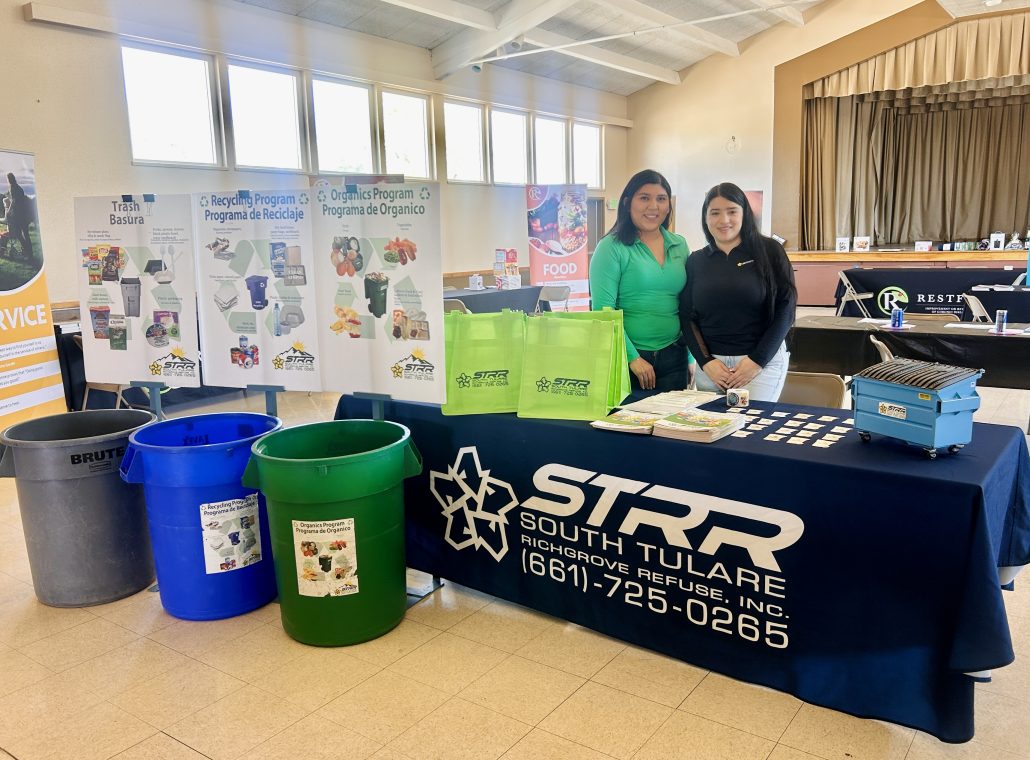
STRR engages with activities in the City of Delano, such as the City Health Walk, Health Fair, and Car Show.
Going Green
STRR is committed to setting the standard for environmentally responsible operations. The truck fleet has been retrofitted to meet California’s strict standards and the company encourages recycling through education.
Customers are provided with a green can to allow for collection of yard waste, a black can for refuse, and a blue recycling can for all items that are recyclable. STRR then hauls the materials to be recycled at a Material Recovery Facility (MRF).
We collect steel, cardboard, plastic, construction waste, tires, and e-waste such as computers and televisions, and recycle accordingly.
Mandatory Recycling and Organics Laws
California has enacted several laws focused on waste reduction, resource conservation, and greenhouse gas emission mitigation. Four specific laws primarily impact commercial entities and multifamily dwellings with five or more units: AB 341 (Mandatory Commercial Recycling), AB 1826 (Mandatory Commercial Organics Recycling), AB 827, and SB 1383 (Short-lived Climate Pollutants Reduction Strategy). Among these, only SB 1383 applies to single-family residences and multifamily dwellings with fewer than five units.
There are several key laws governing recycling and waste management in California. SB 1383 was designed to help the state achieve its diversion objectives and promote the responsible handling of resources by reducing landfill contributions. In 2017, AB 1826 required that organic waste recycling extended to businesses that generate 4 cubic yards of organic waste which includes food scraps, yard trimmings and food soiled paper. Multifamily complexes are only required to recycle yard waste.
As of September 2020, all businesses that generate over 2 cubic yards of solid waste must arrange for organic waste recycling services.
SB 1383
In 2016, Governor Brown enacted Senate Bill 1383, establishing comprehensive standards to reduce methane emissions in California in support of climate change mitigation efforts. Food waste disposed of in landfills is among the state’s largest sources of methane, a potent greenhouse gas with significantly higher warming potential than carbon dioxide. To address this issue, the legislation aims to reduce food waste sent to landfills by 50% by 2020 and 75% by 2025. This requires diverting food waste from traditional landfills into organics recycling programs such as composting or utilizing scraps for animal feed. The law mandates organics recycling practices and will become effective starting January 1, 2022. For additional information and the full bill text, please visit: https://calrecycle.ca.gov/organics/slcp/
SB 1383 also requires that 20% of edible food be recovered to support individuals experiencing food insecurity. Certain businesses will be obligated to donate surplus edible food that would otherwise be discarded. This obligation applies to “Tier 1” and “Tier 2” businesses. Tier 1 includes wholesale food producers, supermarkets, and food distributors, while Tier 2 encompasses large restaurants, major food service venues, and similar entities. The City of Delano will be in contact with both Tier 1 and Tier 2 businesses to develop a comprehensive food donation plan.
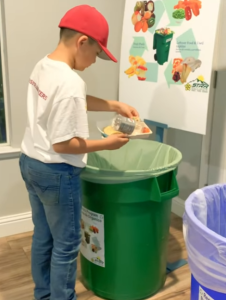
STRR has collaborated with the Richgrove School District and has a recycling program to teach children about recycling. Our recycling program consists of education for kids grades K-8, on a classroom-to-classroom basis. We also distribute pencils, coloring books, water bottles, and various recyclable items to demonstrate what recycled materials can become.
Education Presentation
Download our Flyers to Learn More
School Recycling Program Flyer
School Organics Recycling Flyer
School Trash Disposal Flyer
Careers at STRR
STRR is currently hiring drivers and non-drivers. Please reach out to us for more information.